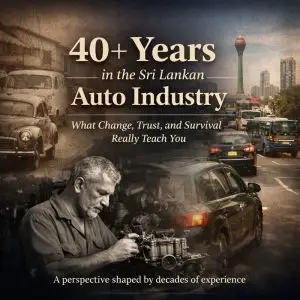
For more than four decades, the Sri Lankan auto industry has been anything but predictable. Governments changed, policies shifted overnight, technology leapt forward, and the economy tested even the strongest businesses. Yet through all of this, some names endured—not because they were the loudest or the cheapest, but because they understood something deeper about change, trust, and survival.
At Srikantha Motors, our journey across these years has offered lessons that no textbook or business seminar could ever teach.
A Very Different BeginningWhen we first entered the industry, Sri Lanka’s roads told a very different story. Vehicles were fewer, simpler, and more mechanical than electronic. Engines spoke through sound and vibration, not warning lights. Mechanics relied on experience—the feel of a misfire, the smell of overheating oil, the rhythm of an engine at idle.
Business itself was slower. Orders were placed face to face. Trust was built over cups of tea, not WhatsApp messages. A [...]
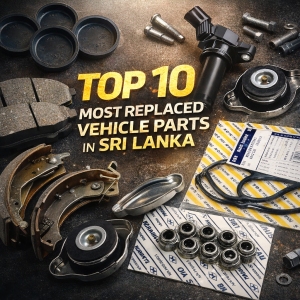
Keeping your vehicle in good condition is essential for safety, fuel efficiency, and long-term cost savings. In Sri Lanka’s tropical climate and mixed road conditions, certain spare parts wear out faster than others.
Based on global automotive maintenance data, industry reports, and local workshop experience, here are the Top 10 Most Replaced Vehicle Parts in Sri Lanka—and why they matter.
Why This Matters to Sri Lankan Vehicle OwnersMany breakdowns and expensive repairs happen due to delayed replacement of basic wear-and-tear parts.
Regular replacement helps you:
✔ Improve road safety
✔ Reduce fuel consumption
✔ Avoid sudden breakdowns
✔ Extend vehicle life
✔ Lower long-term costs
Understanding these common replacement parts helps you plan maintenance wisely.
1. Brake Pads (Most Frequently Replaced Part)Why they wear out:
Brake pads wear down through constant friction during braking.
Why they matter:
They directly affect stopping distance and safety.
Replacement signs:
- Screeching noise
- Reduced [...]
- June 22, 2025
- BLOG POSTS, BRAKE PAD, Products, Sales, More Categories...
- Posted by Vipula Thrimanne
- No comments yet

At Srikantha Motors, our legacy is defined by unwavering trust, superior performance, and an unrelenting drive to deliver only the finest in automotive excellence. Today, we are proud to unveil a new era in braking technology — Seiken Brake Pads — now available exclusively through Sri Lanka’s most trusted name in auto parts.
Engineered for Excellence, Built for the Smart.Seiken Brake Pads are not just another replacement part. They are the embodiment of advanced Japanese engineering — where every compound, every contour, and every test is purpose-built to elevate your driving experience. Designed with a next-generation ceramic formulation, these brake pads offer quiet, consistent, and confident braking, no matter the road, no matter the journey.
When it comes to safety, compromise is not an option — and with Seiken, compromise is never necessary.
 [...]
[...]

When the skies open and the monsoon rains begin to fall across Sri Lanka, one simple component becomes the frontline of your driving safety — your wiper blades. Often overlooked until it’s too late, these slim strips of rubber determine how clearly you see the road, pedestrians, and vehicles during heavy showers. At Srikantha Motors, we believe visibility equals safety — and that begins with choosing the right wipers.
🚗 Why Wiper Blades Deserve Your AttentionUnlike tires or brakes, wiper blades don’t make noise when they fail. But the consequences of worn-out wipers — blurry windshields, streaks, or smears — can be just as dangerous, especially during a sudden downpour on a busy Colombo road or a misty drive through the hill country.
Many Sri Lankan drivers delay replacing wipers until they’re completely unusable. This puts you, your passengers, and everyone else on the road at risk.
✅ Signs It’s Time to Replace Your [...]
ඔබේ වාහනයේ බ්රේක් පද්ධතියේ ඉතාමත් වැදගත් කොටසක් වන්නේ බ්රේක් පැඩ්ය. නිවැරදි බ්රේක් පැඩ් වර්ගය තෝරා ගැනීමෙන් ඔබගේ ආරක්ෂාව, වාහනයේ කාර්යක්ෂමතාවය සහ නඩත්තු වියදම් වඩාත් මැනවින් පාලනය කළ හැක.
🚗 බ්රේක් පැඩ් වර්ග
බොහෝ වාහන සඳහා භාවිතා වන ප්රධාන වර්ග 3ක් පවතී:

1. සෙරමික් (Ceramic) බ්රේක් පැඩ්
- ද්රව්යය: සෙරමික් තන්තු, මැටි හා ලෝහ කුඩු
- ආශ්රිත වාසි:
- ශබ්ද රහිත (noise-free)
- දූවිලි අඩු වේ
- දිගු ආයු කාලය
- දිනපතා ධාවනය සඳහා සුදුසුයි
- අවාසි:
- සාපේක්ෂව අදික මිල
2. අර්ධ-ලෝහමය (Semi-Metallic) බ්රේක් පැඩ්
- ද්රව්යය: ඉස්පිලින්, යකඩ වැනි ලෝහ සමඟ රබර් හා තෙල් සංයෝග
- ආශ්රිත වාසි:
- තාපයට ඉතා හොඳ ප්රතිරෝධය
- දැඩි භාවිතයට (heavy-duty) සුදුසුයි
- දැඩි බ්රේක් ක්රියාව
- අවාසි:
- ශබ්ද වැඩියි
- රොටර් වල ගෙවීම වැඩිවේ
3. සර්වජනික / ජෛවික (Organic) බ්රේක් පැඩ්
- ද්රව්යය: ස්වාභාවික තන්තු, රබර්, හා ජෛව සංයෝග
- ආශ්රිත වාසි:
- [...]

As the global quest for sustainable and clean energy sources intensifies, automotive giants are exploring innovative solutions to reduce our carbon footprint. One such pioneering effort is Toyota’s vision of a hydrogen combustion engine, a technology that promises to revolutionize the automotive industry. In this scenic exploration, we will delve into the workings of hydrogen combustion engines, critically compare them with electric vehicles (EVs), and examine their impact, particularly in the Sri Lankan context. We will also highlight Srikantha Motors Lanka (Private) Limited’s commitment to promoting this groundbreaking technology.
Toyota’s Vision: The Hydrogen Combustion EngineToyota has long been at the forefront of automotive innovation, and its commitment to hydrogen combustion engines is a testament to its vision for a sustainable future. Unlike traditional internal combustion engines that rely on fossil fuels, hydrogen combustion engines utilize hydrogen gas as fuel. This process results in the production of water vapor as the primary emission, significantly reducing [...]

Sri Lanka’s automotive industry is experiencing significant transformations, driven by policy changes, growth in local manufacturing, and international collaborations.
Lifting of Import RestrictionsIn a notable policy shift, the Sri Lankan government announced the phased lifting of the temporary suspension on motor vehicle imports, effective October 1, 2024. This decision aims to rejuvenate the automotive sector and address the challenges of an aging vehicle fleet. The phased approach includes:
- Stage 1 (October 1, 2024): Resumption of imports for public passenger transport vehicles and special-purpose vehicles.
- Stage 2 (December 1, 2024): Lifting of restrictions on commercial or goods transportation vehicles.
- Stage 3 (February 1, 2025): Permission for the importation of personal usage motor vehicles, including cars, vans, SUVs, and pickups.
This strategic easing is anticipated to inject vitality into the auto industry and enhance government revenue.
Source: Daily News LK
Sri Lanka’s local vehicle assembly and automotive [...]

At Srikantha Motors, we believe true performance lies in the details — and nowhere is that more evident than in your vehicle’s braking system. For decades, we’ve earned the trust of drivers by offering only the most dependable parts, and among them, Seiken brake rotors have quickly become a standout choice.
Engineered in Japan to meet the highest standards, Seiken rotors are known for their durability, heat resistance, and smooth, vibration-free performance. Whether you’re navigating city traffic or cruising at high speeds, they deliver consistent, confident stopping power.
But the best systems are never made of one part alone.
We’re excited to share that the Seiken range will soon be expanding — offering customers a more complete solution for their braking needs. While we’re keeping the details under wraps for now, what’s coming is designed to work in perfect harmony with the rotors you already trust.
It’s not just an addition — it’s a step [...]

Understanding Wheel Hub Oil Seals and the Importance of Quality Sealing Technology
In automotive systems, wheel hub oil seals play a vital yet often overlooked role in ensuring the longevity and efficiency of wheel assemblies. These seals are specifically designed to retain lubrication within the wheel hub bearings while preventing the entry of contaminants such as water, dust, and debris.
A failure in this component can lead to a cascade of mechanical issues — from worn-out bearings and increased friction to overheating and ultimately, costly repairs. That’s why selecting a high-quality oil seal is not just a matter of preference but a matter of engineering reliability.
How Sealing Technology Impacts PerformanceWheel hub seals operate in a challenging environment. They must withstand heat generated by high-speed wheel rotation, pressure from bearing loads, and constant exposure to road elements. Advanced sealing technology addresses these challenges through:
- Material selection: Premium seals use high-grade rubber and [...]
As the global quest for sustainable and clean energy sources intensifies, automotive giants are exploring innovative solutions to reduce our carbon footprint. One such pioneering effort is Toyota’s vision of a hydrogen combustion engine, a technology that promises to revolutionize the automotive industry. In this scenic exploration, we will delve into the workings of hydrogen combustion engines, critically compare them with electric vehicles (EVs), and examine their impact, particularly in the Sri Lankan context. We will also highlight Srikantha Motors Lanka (Private) Limited’s commitment to promoting this groundbreaking technology.
Toyota’s Vision: The Hydrogen Combustion EngineToyota has long been at the forefront of automotive innovation, and its commitment to hydrogen combustion engines is a testament to its vision for a sustainable future. Unlike traditional internal combustion engines that rely on fossil fuels, hydrogen combustion engines utilize hydrogen gas as fuel. This process results in the production of water vapor as the primary emission, significantly reducing [...]
